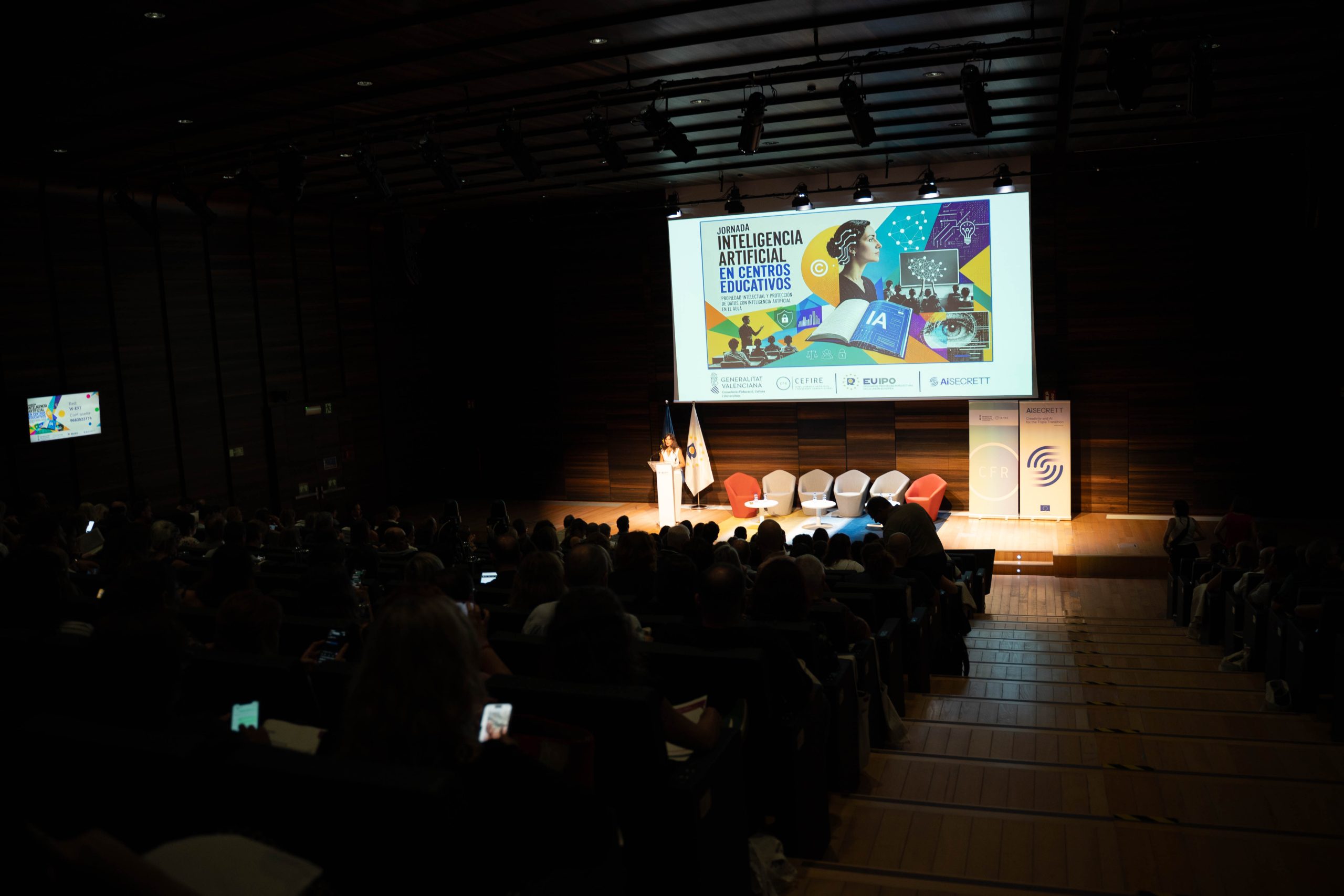
The session opened a timely conversation on authorship, transparency, and the role of human contribution in creative processes increasingly shaped by artificial intelligence.
Innovent Forum is a two-day innovation and technology event designed to connect research, entrepreneurship, technology, and society through workshops, presentations, live demonstrations, networking activities, and public discussion. Within that wider setting, the AI-SECRETT session brought a particularly relevant perspective to the table: not simply whether AI is involved in content creation, but how that involvement can be better interpreted, assessed, and communicated.
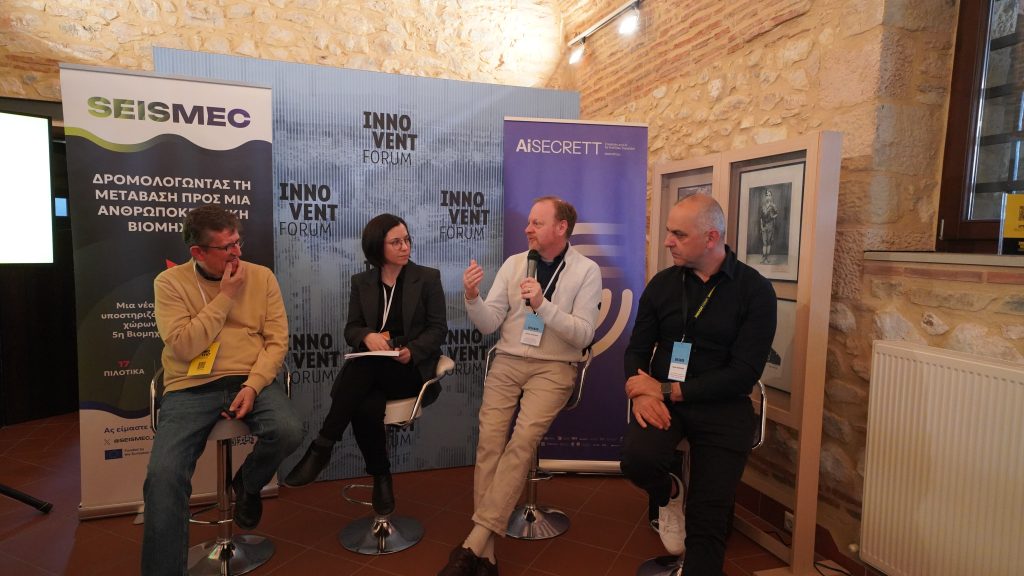
Moderated by Dr. Foteini Salmouka (NCSR “Demokritos”), the workshop brought together academic, research, and industry voices to reflect on authorship, agency, responsibility, and value creation in AI-supported creativity. The discussion highlighted how these questions are becoming increasingly important across sectors as generative technologies become more present in creative and professional practice.
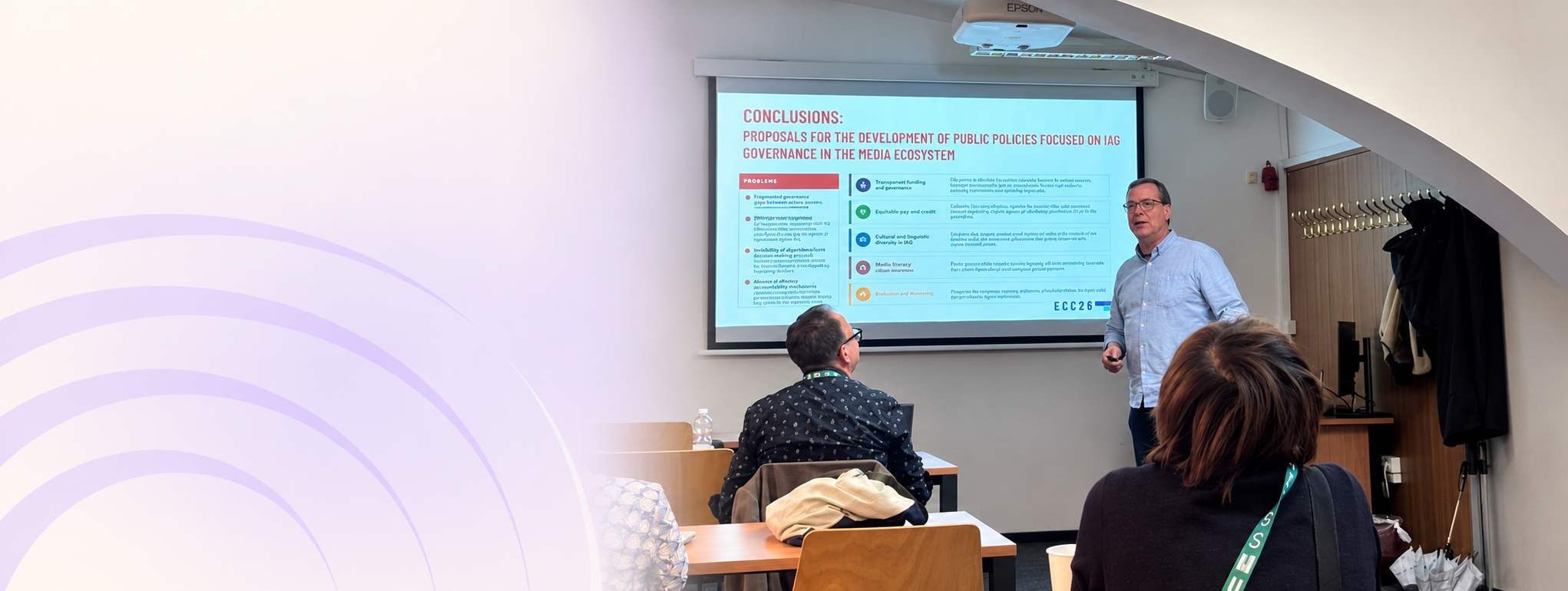
One of the central highlights of the session was the presentation by Pau Rausell Köster (University of Valencia, Econcult), who introduced the Human–AI Creative Contribution Scale (HAICCS), a conceptual and methodological framework developed within AI-SECRETT. The scale proposes a 7-level model for understanding the different ways humans and AI may contribute to creative outputs, moving beyond the overly simplistic binary of “AI-generated” versus “human-made”.
Instead of reducing creative production to two categories, HAICCS offers a more nuanced spectrum, ranging from fully automated synthetic output to pure human authorship. In doing so, it responds to a growing need for clearer ways of talking about creative collaboration between humans and intelligent systems. As the presentation underlined, the real question is no longer simply “Is AI involved?” but rather “How much, how, and where?”
The framework also provides a process-oriented methodology to assess creative contribution by looking at elements such as the origin of creative intent, the degree of human control over generative decisions, the proportion of AI-generated material in the final output, and whether AI is shaping the substance of the work or supporting it in auxiliary ways. This makes HAICCS especially valuable in ongoing conversations around transparency, traceability, and the future of authorship in the age of generative AI.
Alongside this, Francesco Molinari (University of Valencia) presented the broader vision of AI-SECRETT as a four-year European project focused on creativity and AI in support of the digital, green, and social transitions. His intervention emphasised that the project is not only about advanced digital skills, but also about fostering creativity, innovation, ethical awareness, and inclusive approaches to technological change.
Francesco also outlined the wider educational ambition behind AI-SECRETT, including the development of a joint online master’s programme, modular training opportunities, and an AI-supported personalised learning platform. Together, these elements reflect the project’s commitment to equipping professionals with the skills needed to engage critically and creatively with AI, while remaining aligned with broader European priorities around sustainability, inclusion, and social responsibility.
The exchange was further enriched by contributions from Jason Pridmore (Erasmus University Rotterdam), representing the SEISMEC project, who shared perspectives on the challenges of implementing human-centric approaches in European industry, as well as from Chris Clavel (Baccana Group) and Tasos Vasileiadis (JOIST Innovation Park), who brought an innovation and entrepreneurship perspective to the discussion. Their interventions helped connect research and policy questions with the realities of education, industry, and future skills development.
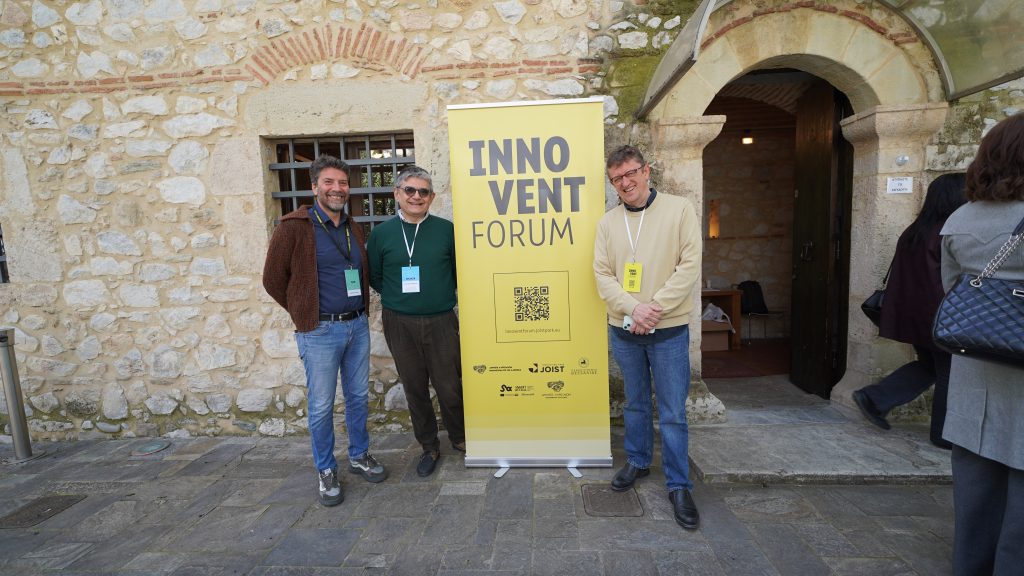
Overall, the workshop fostered a rich and accessible conversation around how to conceptualise and operationalise human-centric creativity in a fast-changing technological landscape. By bringing together research, education, innovation, and industry, the session reflected the wider mission of AI-SECRETT: to ensure that AI strengthens human creativity and capacity, rather than reducing it.
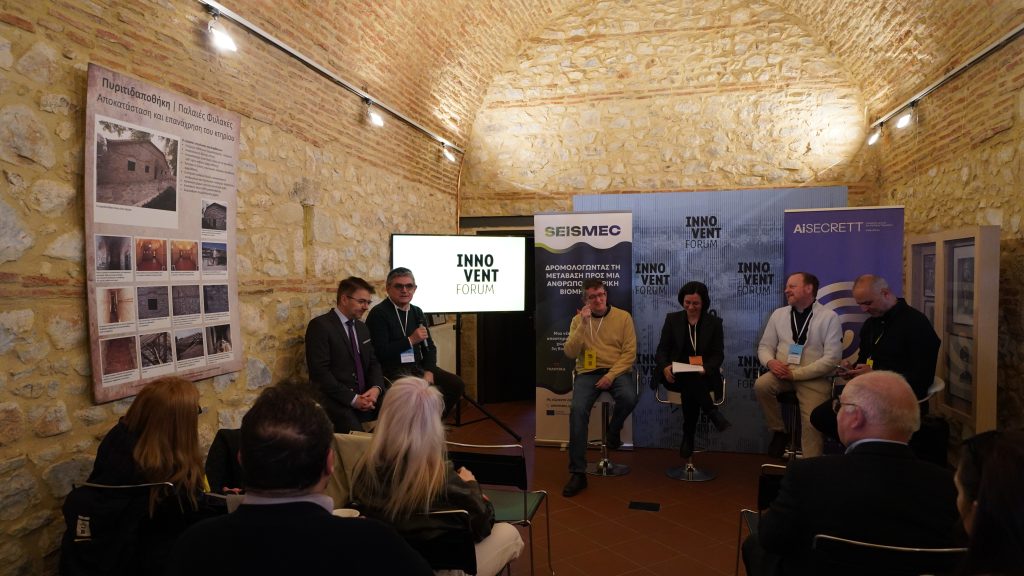
The level of interest in the session also confirmed the relevance of these themes. According to the event summary, more than 70 stakeholders registered for the workshop, while its hybrid format enabled at least 15 stakeholders to attend online. A follow-up message was later shared with registered participants, including the project website and the questionnaire on the Human–AI Creative Contribution Scale, extending the dialogue beyond the event itself.
Photos and materials provided by the workshop contributors.