Two open-access studies developed by researchers at the Universitat Politècnica de València (UPV) and supported by AI-SECRETT provide complementary perspectives on one of the most pressing challenges in crisis communication: how to identify potentially harmful disinformation early and how to respond once it begins to spread.
Published in the scientific journal Electronics, the studies examine both the technological and communicative dimensions of crisis-related disinformation. One introduces an explainable early-warning framework designed to prioritise potentially misleading content at risk of becoming highly amplified. The other analyses the circulation and verification of false or misleading claims during the 2024 València DANA Together, they show why responding to disinformation requires more than identifying whether a claim may be false. It also requires understanding how content gains visibility, moves between platforms and formats, and interacts with verification efforts.
Published on 29 May 2026, Crisis Disinformation and Verification Dynamics in the València 2024 DANA examines the circulation of false and misleading information during the floods that affected eastern and southern Spain between 29 and 31 October 2024. The researchers conducted a quantitative content analysis of the 100 most viral false or misleading claims related to the event, as identified by fact-checking organisations. The items were classified according to their topic, format, platform, dissemination channel, manipulation type and narrative strategy.
The findings reveal an information environment in which conspiracy narratives about the causes of the disaster played a prominent role. Audiovisual content, particularly short videos and images, achieved considerably greater reach than text-based posts. Decontextualisation, emotional appeal and political polarisation also appeared repeatedly and often operated together. The study additionally examines how verification strategies performed. Corrections that used a format similar to the original misleading content were associated with greater relative reach. However, within the analysed sample, verified information still circulated less widely than the false or misleading claims it addressed.
These results underline the importance of proactive crisis communication, multimodal verification and coordination across platforms and institutions. They also show that effective verification depends not only on correcting a claim, but on how, when and where that correction reaches the public.
The second study, Explainable Early-Warning of High-Amplification Crisis-Related Disinformation in Social Media Streams, was published on 12 August 2026. It introduces the Disinformation Diffusion Virality Risk Index, or DDVRI, an explainable early-warning framework that estimates the combined risk that a piece of content is factually problematic and likely to achieve high amplification.
This distinction is important. A system focused only on factual risk may overwhelm verification teams with large numbers of low-visibility cases. A system concerned only with virality may prioritise widely shared content that is not factually problematic. DDVRI brings both dimensions together to help limited verification resources focus on the cases that may require attention first. The framework uses information available during the early stages of circulation, including content, source characteristics, diffusion patterns and propagation structure. It was evaluated using two open datasets: PHEME, which contains conversations and rumours related to news events, and CoAID, which includes health misinformation and social engagement data associated with COVID-19.
In the PHEME experiment, the first six hours of activity were used to estimate which content could reach high amplification within 72 hours. Among the 50 highest-ranked messages for each event, cases combining factual risk and high amplification appeared at approximately three times their average prevalence in the analysed dataset.
In one CoAID model configuration, 27% of the top 50 messages combined disinformation and high amplification.
The researchers nevertheless make a crucial distinction: DDVRI is a prioritisation and triage framework, not a general fake-news classifier or an automatic moderation system. It indicates which content may deserve earlier human review; determining its accuracy and deciding how to respond remain human responsibilities.
The DANA analysis helps explain how crisis disinformation is constructed, amplified and corrected in a real-world setting. The DDVRI framework explores how potentially high-risk cases could be prioritised earlier, before verification teams become overwhelmed or misleading narratives achieve greater visibility. Their combined contribution points towards a response based on both technological innovation and critical media literacy. Early-warning systems can help direct attention, but they must operate alongside human verification, contextual understanding and communication strategies adapted to different formats and platforms.
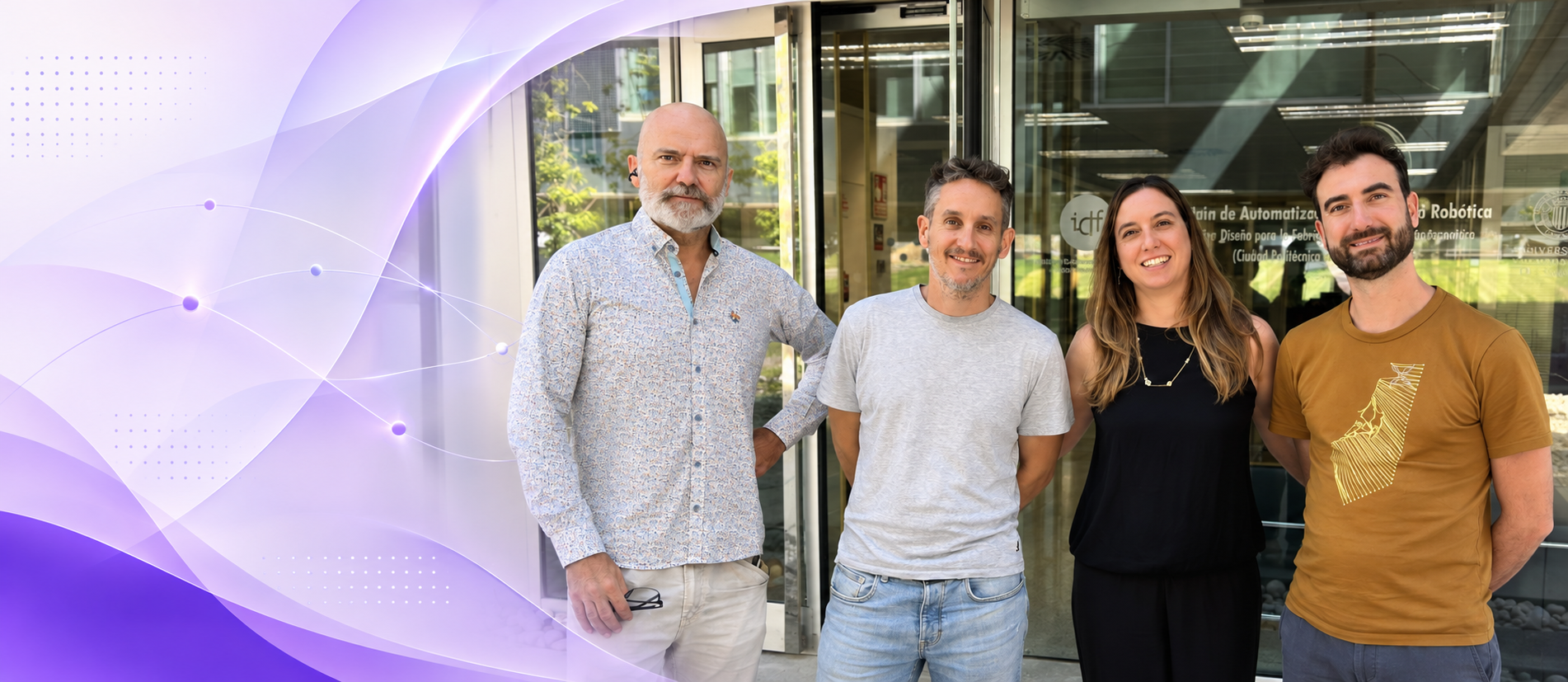
The research was developed by J. Ernesto Solanes, Juan José Climent-Ferrer, Flavio Moriniello, Ana Martí-Testón, Adolfo Muñoz and Luis Gracia at the Universitat Politècnica de València. Both articles acknowledge funding from the European Union’s Digital Europe Programme through AI-SECRETT, as well as from the Spanish Government and the Generalitat Valenciana.
The early-warning research has also attracted attention beyond the academic community. Its findings have been covered by Spanish media and news organisations including Valencia Plaza, El Periòdic, Agencia EFE, COPE and RUVID. This coverage reflects the wider public relevance of research connecting artificial intelligence, crisis communication and disinformation. It also reinforces one of its central messages: AI can help human teams identify where limited verification resources may be most urgently needed, but it does not replace the judgement, responsibility or decisions of those teams.
Through this work, AI-SECRETT contributes to research on responsible and human-centred uses of artificial intelligence while strengthening the connection between scientific knowledge, media literacy and real-world communication challenges.
Related information: Read the original news published by the Universitat Politècnica de València.